A Safer Backyard
By reducing height correctly, we minimize the risk of windthrow without creating weak, dangerous regrowth.
If your trees have outgrown their space, we provide safe, council-compliant height reductions and pruning that protect your property and the tree's health.
Serving Moss Vale and the broader Southern Highlands.
When you search for Tree Lopping in Moss Vale, you are usually looking to solve a problem: a tree blocking views, threatening a roof, or just getting too big. We solve those problems the right way.
Radiata pine windbreaks and large poplars around Moss Vale often grow out of control. While historically people 'lopped' them, this creates massive top-heavy hazards a few years later. We provide modern, arborist-approved height reductions or full dismantling if the tree is no longer suitable for the space.
By reducing height correctly, we minimize the risk of windthrow without creating weak, dangerous regrowth.
Proper pruning lasts longer. Lopped trees require constant, expensive maintenance as they aggressively try to regrow their canopy.
Your majestic oaks and gums retain a natural, balanced appearance rather than looking like hat-racks.
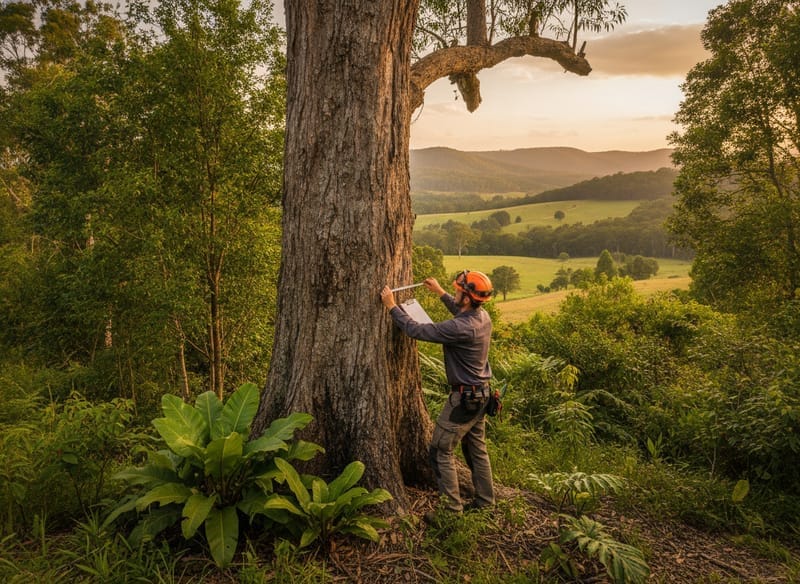
We discuss why you want the tree lopped (e.g., more light, safety concerns) and identify the best solution.
We evaluate the tree to see if it can be safely reduced or if removal is the more practical option.
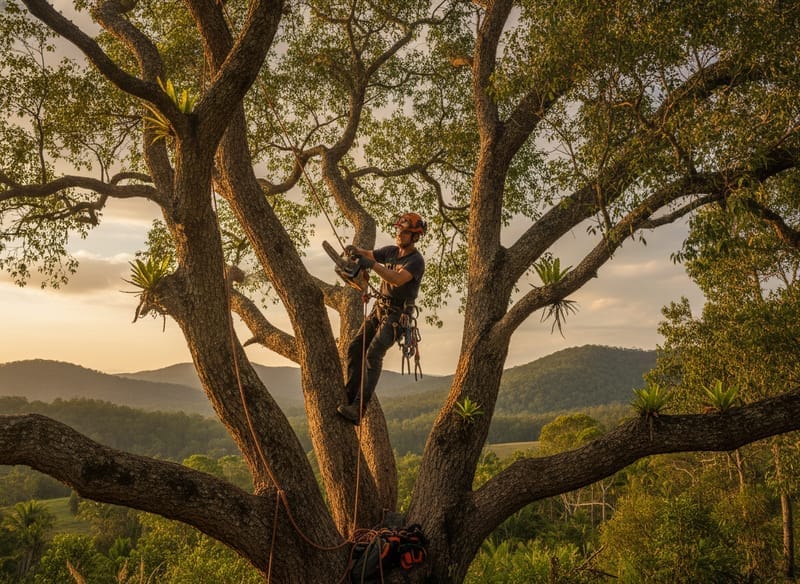
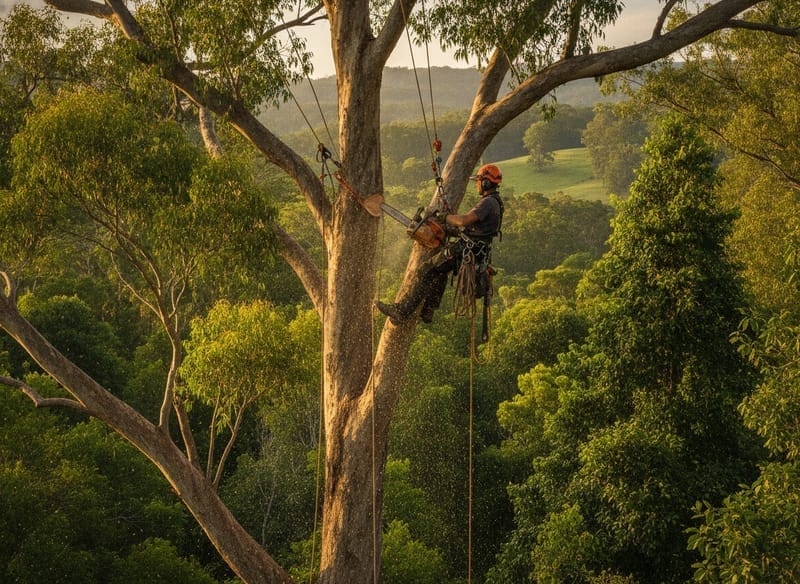
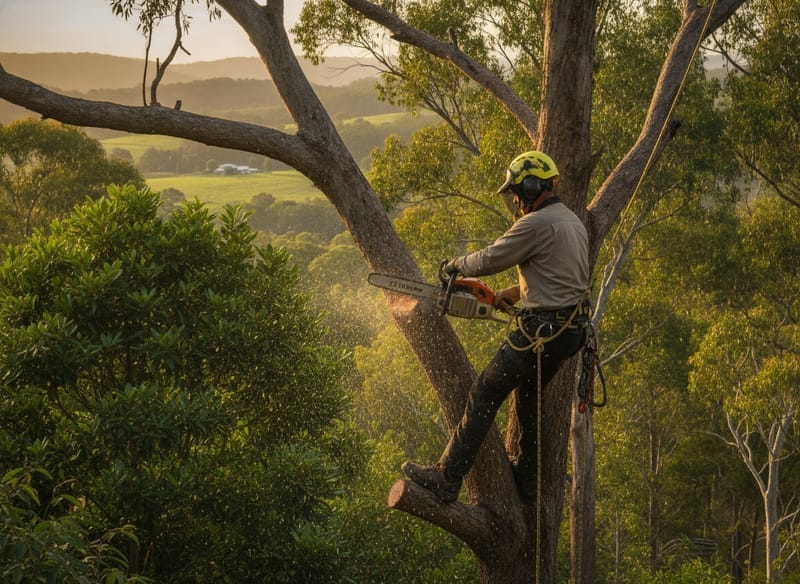
Our climbers perform selective reduction cuts at appropriate branch collars, honoring the tree's natural structure.
We remove all the heavy brush and leave your property looking neat and tidy.
Welcome to Southern Highlands Arborist. When established properties in our cool climate need their large canopy managed, they call us for expert Tree Lopping Moss Vale. Our highland region is defined by its massive 80 to 120-year-old English oaks, elms, liquidambars, and towering native ribbon gums. But when these enormous trees grow right next to homes, hang over acreage driveways, or interfere with powerlines, their size needs to be safely and professionally controlled.
Whether you are managing a sprawling acreage estate in Burradoo, a heritage block right here in Moss Vale, or a rural residential property out in Exeter, our local team of qualified climbing arborists has the heavy-duty equipment to handle it. We specialise in reducing the height, spread, and weight of massive canopies using techniques that keep your trees healthy and structurally sound against the ferocious westerly gales we experience off the escarpment.
When locals ask us for tree lopping, they usually mean they want their tree made smaller or an overhanging branch removed to let in more winter sun. But in the horticultural world, true "lopping" or "topping" involves indiscriminate heading cuts that chop branches mid-internode and leave large, ugly stubs. This is one of the worst things you can do to a mature tree in the Southern Highlands.
Unqualified operators or DIY attempts that simply chop the top off a massive radiata pine or liquidambar cause permanent structural damage. The tree responds to the stress by pushing out desperate, weakly attached "epicormic" growth. When our heavy summer thunderstorms and downburst winds hit, these weak branches snap off easily, becoming serious hazards to your roof and property. Worse, the large open stubs left by crude lopping invite decay straight into the trunk, drastically shortening the tree's life and eventually forcing a complete, expensive removal.
At Southern Highlands Arborist, we solve this by applying the Australian Standard for Pruning of Amenity Trees (AS4373). Instead of butchering the tree, our AQF Level 3 climbers use targeted techniques like crown reduction and crown thinning. We achieve the exact same goal—a smaller, safer tree—but we cut at the correct branch collars. This allows the tree to heal naturally, maintain its structural integrity, and look fantastic on your property.
We offer targeted, AS4373-compliant canopy management alternatives to traditional lopping to safely manage the size and spread of your trees while maintaining their health.
The safest alternative to traditional lopping for reducing the overall height and spread of a tree. We selectively prune branches back to appropriate lateral growth points, reducing the canopy by up to 25% without leaving ugly stubs or encouraging weak, dangerous regrowth.
Perfect for acreage driveways or street-facing heritage blocks. We remove the lowest branches to provide clear, safe access for vehicles, pedestrians, and ride-on mowers while maintaining the upper canopy's health and structural balance.
We selectively remove secondary branches throughout the canopy to reduce wind resistance and let more winter light into your garden. This is crucial for large English oaks and elms that catch our fierce westerly gales, reducing the risk of windthrow.
When a specific heavy limb is extending over your roof or dropping excessive debris into gutters, our climbers use double-rope access techniques to safely dismantle that single branch without damaging the rest of the tree or the property below.
Following summer thunderstorms or heavy winter windthrow, we conduct urgent canopy reductions to stabilise damaged trees. We remove hanging broken limbs and reduce structural weight to save the remaining tree and protect your home.
Delivering safe, professional tree management on steep hinterland blocks and narrow heritage village streets requires a meticulous approach. Here is how our team handles every canopy reduction project from start to finish.
1. On-Site Assessment and Consultation We visit your property to inspect the tree's health, species, and structural integrity. We discuss your exact goals—whether you need more sunlight, building clearance, or hazard reduction—and recommend the best AS4373-compliant pruning method to achieve it.
2. Fixed-Price Quoting and Council Checks We provide a transparent, fixed-price quote with no hidden costs. Because Wingecarribee Shire Council protects trees over 6 metres tall, we will advise if your planned reduction exceeds the 10% exempt pruning allowance. If required, we can assist with the necessary Vegetation Clearing Permit paperwork.
3. Safe Execution and Climbing On the day, our AQF Level 3 climbing arborists access the canopy using advanced rope techniques or our specialised spider lifts for tight access blocks. We make precise collar cuts, carefully rigging and lowering heavy limbs to the ground to protect your garden, fences, and home below.
4. Chipping and Site Cleanup Everything we cut is instantly processed through our heavy-duty wood chippers. We can leave the high-quality mulch for your garden or cart it away in our tipper trucks. We thoroughly rake and blow down the site, leaving your property immaculate.
Tree work is inherently dangerous, particularly when dealing with massive exotics and mature ribbon gums in wet, windy conditions. Southern Highlands Arborist is fully insured with comprehensive Public Liability and WorkCover for our entire crew, giving you complete peace of mind.
Every cut we make is strictly governed by AS4373 (Pruning of Amenity Trees) to ensure the long-term health of your canopy. Our on-site crew includes AQF Level 3 climbing arborists, and we have AQF Level 5 consulting arborists available for formal reports. From elevating work platform (EWP) tickets to working at heights and traffic management for roadside jobs, our team holds every necessary licence to execute your job safely and legally.
Managing trees in our region requires highly localised knowledge. Our cool temperate climate at 600–800m altitude means we have a unique mix of colossal exotics and locally endemic species like the Paddys River Box and Snow Gum. The deep, saturated clay soils and high wind exposure mean that heavy canopies are particularly vulnerable to windthrow during east coast lows, making weight reduction a critical maintenance task.
Wingecarribee Shire Council takes tree protection seriously. Under the Wingecarribee Local Environmental Plan (WLEP) 2010, any tree over 6 metres tall or with a crown spread of 4 metres is protected. Pruning more than 10% of a tree’s canopy generally requires Council approval. Furthermore, if your property falls within a mapped heritage conservation area—common in the historic pockets of Moss Vale, Bowral, and Berrima—the rules are even stricter. Our local team understands these overlays intimately and ensures your canopy management is 100% compliant.
After we complete a professional canopy reduction, your tree will need a little time to adjust to its new shape and the altered wind dynamics. We recommend applying a thick layer of the fresh mulch we processed on-site around the structural root zone. This helps retain moisture and regulate soil temperature during our heavy winter frosts.
Keep an eye on the tree during the next spring flush. While our AS4373-compliant cuts minimise stress, you should monitor the canopy for overall health. We generally recommend having our arborists return every 3 to 5 years to assess the structural integrity of your large canopy trees and perform any minor maintenance pruning required before the summer storm season hits.
The cost of height reduction or crown management depends on the size and location of the tree.
We'll give you honest advice. If a tree needs to be removed rather than reduced, we will quote you fairly for both options.
Educating and assisting property owners throughout the Southern Highlands.
Contact us today for professional, compliant canopy reduction and expert advice.
Get Expert Advice