Immediate Safety Restored
We remove the immediate threat of falling timber, protecting your family and home.
Fast, safe cleanup of fallen limbs, broken canopies, and uprooted trees across Burradoo estates after extreme weather.
Servicing Burradoo, Bowral, and all storm-affected Highlands suburbs.
When a southerly buster or summer thunderstorm hits, our Storm Damage Tree Removal Burradoo service is here to restore safety to your property.
Burradoo's altitude and exposure to downburst winds mean that top-heavy exotics like poplars and pines are highly susceptible to failure during extreme weather events.
We remove the immediate threat of falling timber, protecting your family and home.
Fallen trees blocking estate driveways or gates are quickly sectioned and removed.
Our professional documentation makes dealing with your insurer straightforward.
We assess the structural integrity of the damaged tree and surrounding assets.
We stabilise the situation, removing weight from compromised limbs or structures.
Using chainsaws, rigging, and EWPs, we safely dismantle the fallen or leaning timber.
All debris is chipped, and heavy logs are removed or left as firewood at your request.
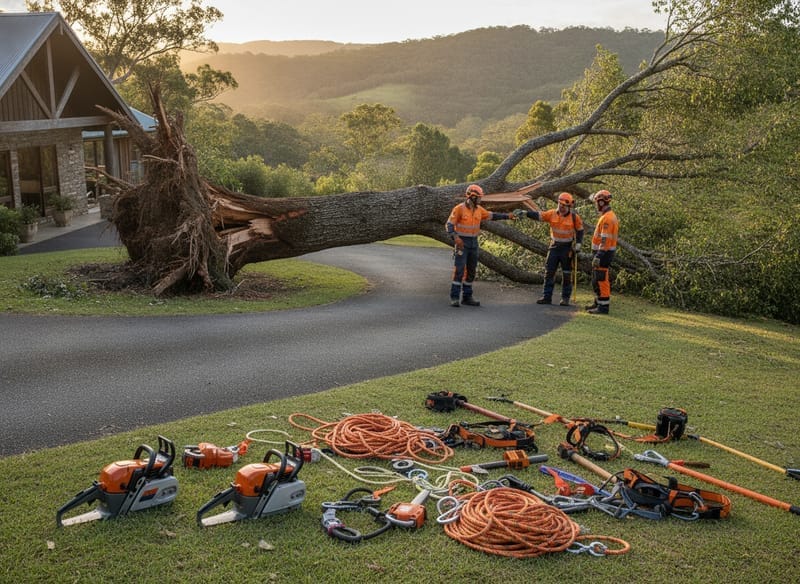
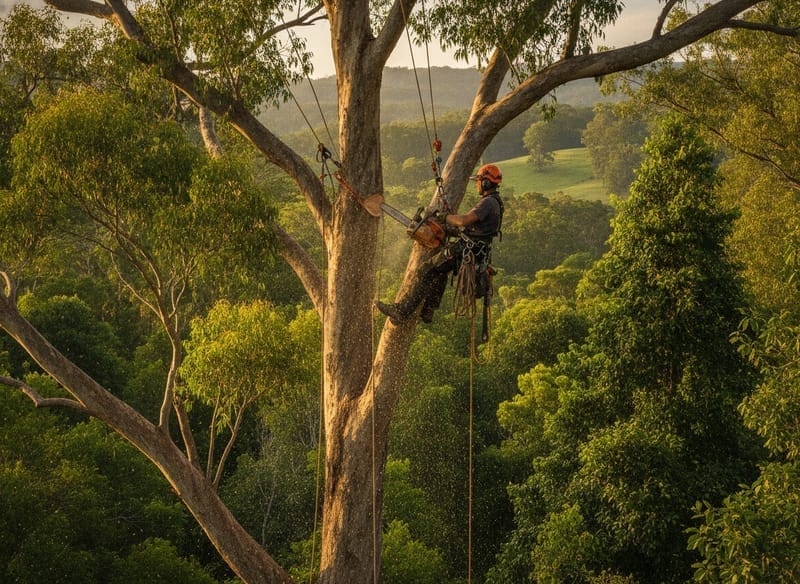
When severe east coast lows and summer thunderstorms sweep across the Southern Highlands, they leave a trail of destruction in their wake. If your acreage or residential property has been hit, you need professional Storm Damage Tree Removal Burradoo to safely clear hazards and protect your home. At Southern Highlands Arborist, we provide arborist-led triage for fallen, hung-up, and shattered trees. Burradoo is known for its beautiful, established estates featuring massive 80 to 120-year-old English Oaks, Liquidambars, and towering local Ribbon Gums. While these grand trees are stunning, their immense size combined with saturated clay soils and high winds creates extreme windthrow risks. When an ancient exotic or large eucalypt fails, it rarely falls neatly. Our team uses specialised cranes, heavy-duty chippers, and rope-access climbing techniques to safely dismantle snapped canopies and uprooted giants, restoring safety to your driveway and home.
After a major storm front batters the Southern Highlands, the instinct for many property owners is to fire up a small chainsaw and start clearing the driveway. However, managing fallen or structurally compromised timber is one of the most dangerous tasks in arboriculture. Storm-damaged trees are unpredictable; they are often under severe tension or compression, and a single incorrect cut can cause heavy limbs to snap back or trunks to roll unexpectedly. Relying on under-qualified contractors is equally risky. Fly-by-night operators lack the heavy equipment—such as loader cranes and track-mounted EWPs—needed to carefully lift tonnes of shattered English Elm or Ribbon Gum off a roof without causing secondary structural damage. They also rarely understand proper insurance documentation, leaving you out of pocket when it’s time to file a claim. Our solution is a calculated, AS4373-compliant approach to storm response. Before starting a chainsaw, our AQF Level 3 climbers and ground crew assess the tension points, stability of the root plate, and overhead hazards. We perform safe, strategic dismantling, removing the immediate danger before processing the timber. If a standing tree has lost a major limb, we evaluate its remaining structural integrity, avoiding destructive lopping in favour of target pruning to see if the tree can be safely retained.
We deploy specialised techniques and heavy machinery to tackle complex storm damage across Burradoo’s large estate blocks.
We conduct an immediate property sweep to tag hazards. We prioritise trees that have breached houses, brought down powerlines, or blocked access roads, neutralising the immediate danger before proceeding with full clean-up.
Uprooted trunks and hung-up branches store massive amounts of kinetic energy. Our climbers use advanced cross-cutting techniques to safely relieve this tension without causing trunk barber-chairing or uncontrolled rolling.
When massive exotics like Pin Oaks collapse onto roofs in tight heritage spaces, we use mobile cranes to vertically lift tonne-heavy sections clear of the structure, entirely avoiding secondary impact damage to the property.
Saturated Burradoo soils often lead to full root-plate failure. We safely detach the trunk while securing the root ball, ensuring the massive clay and root mass settles back into the ground smoothly rather than snapping back dangerously.
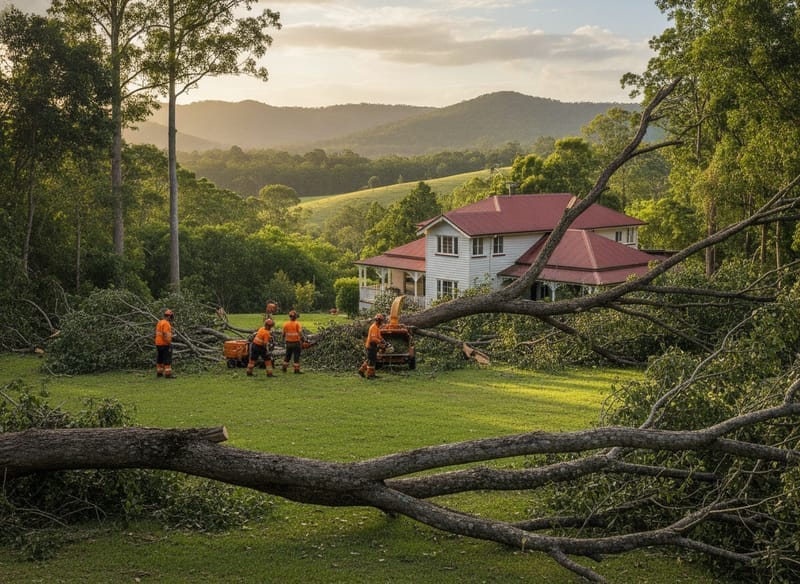
We utilise 12-inch wood chippers and mini-loaders to process massive volumes of storm debris efficiently. This clears your acreage rapidly, turning shattered canopies into useful mulch while removing heavy logs offsite via tipper trucks.
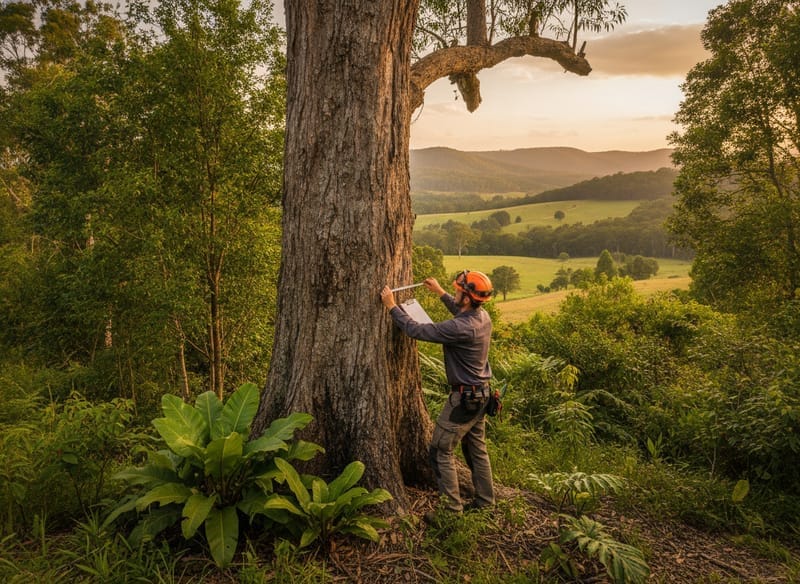
We know that storm emergencies are incredibly stressful. Our process for Storm Damage Tree Removal Burradoo is designed to be fast, safe, and fully documented for your insurer. Step 1: Emergency Triage and Assessment. When you call, we dispatch a team to assess the site. We walk the property, identify the immediate hazards—like a hung-up Ribbon Gum limb over a driveway—and secure the zone. Step 2: Photographic Evidence and Quoting. Before a single branch is cut, we take detailed photographs of the fallen timber and structural impacts. We provide a transparent, itemised quote separating make-safe work from general cleanup, formatted perfectly for your insurance claim. Step 3: Make-Safe Execution. Our primary goal is stopping further damage. Using EWPs or rope-access techniques, our climbers remove weight off roofs and clear blocked accessways safely. Step 4: Full Dismantling and Processing. Once the site is safe, we dismantle the remaining broken trunks and uprooted bases. We run branches through our high-capacity chippers and load heavy timber onto our tipper trucks using skid steers. Step 5: Final Cleanup and Handoff. We rake the site clear of small debris and leave your property safe. We will also advise if the Wingecarribee Shire Council requires any retroactive reports or documentation for the emergency removal of protected trees.
When undertaking hazardous emergency work, compliance is non-negotiable. Our team operates strictly under AS4373 - Pruning of Amenity Trees, ensuring any standing damaged trees are treated with proper branch collar cuts rather than panicked lopping. We are fully public liability insured and carry comprehensive WorkCover for our staff. Every removal is executed by AQF Level 3 certified arborists holding current chainsaws, working at heights, and elevated work platform (EWP) tickets. For complex situations requiring Council or insurance intervention, our AQF Level 5 consulting arborists can provide rapid, legally compliant structural assessments, ensuring you are completely protected both financially and legally during the cleanup.
Burradoo is famous for its heavily planted estate gardens, but these pose unique challenges during severe highland weather. Large deciduous exotics like Silver Birch and English Oak frequently sustain heavy limb damage, while local Paddys River Box and Snow Gums can suffer total windthrow when the shale and basalt soils become saturated.
Under the Wingecarribee Shire Council local environmental plan, trees over 6 metres tall or with a trunk circumference of 500mm are protected. Fortunately, a Tree Removal Exemption typically covers up to 5 trees in a 12-month period if they are dead, dying, or dangerous—which certainly applies to acute storm damage. However, Burradoo has pockets mapped as heritage conservation areas. If your property falls under these overlays (WLEP 2010 clause 5.10), even emergency work requires careful documentation. Our AQF Level 5 arborists provide the necessary photographic evidence and reports to ensure your emergency clearing remains fully compliant with council regulations.
Once the immediate storm damage has been cleared, it is crucial to monitor the remaining trees on your Burradoo property. Wind gusts that uproot one tree often destabilise the root systems or crack the unions of neighbouring trees. Check your surviving canopy for hanging branches, fresh cracks in the bark, or subtle lifting of the soil around the base, which indicates a failing root plate. We recommend booking our team for a proactive health and structural assessment of your large exotics before the next storm season (October to March). Crown thinning and weight reduction pruning can significantly reduce wind sail, helping your mature trees withstand the next major Southern Highlands gale.
Storm damage pricing depends on the complexity and danger level of the situation.
We provide clear, upfront pricing before we commence any storm cleanup works.
We provide priority storm response across the Southern Highlands.